|
Still chasing the glow you used to get from your skincare routine? Menopause changes your skin from the inside out. As estrogen declines, collagen production drops, leaving skin drier, thinner, and less resilient.
One ingredient worth knowing: GHK-Cu, a copper peptide. It helps stimulate collagen and elastin, and your body naturally produces it until... aging slows it down. That's why it's the hero ingredient in Midi's Copper Peptide Repair Cream, which helps visibly improve firmness, hydration, and irritation.
GHK-Cu is a great place to start — but it's just one piece of the puzzle. A Midi Clinician can help determine what else your skin needs, whether that's retinoids, vitamin C, or another evidence-based treatment, so your routine works together to deliver the best results. |
| Get Started |
|
|
|
|
|
How Do You Know When Menopause Is Actually Over? |
|
Read More |
|
|
|
What to Know About Hexarelin and Its Alleged Benefits |
|
Read More |
|
|
|
When to Increase Your Estrogen Dose During Menopause |
|
Read More |
|
|
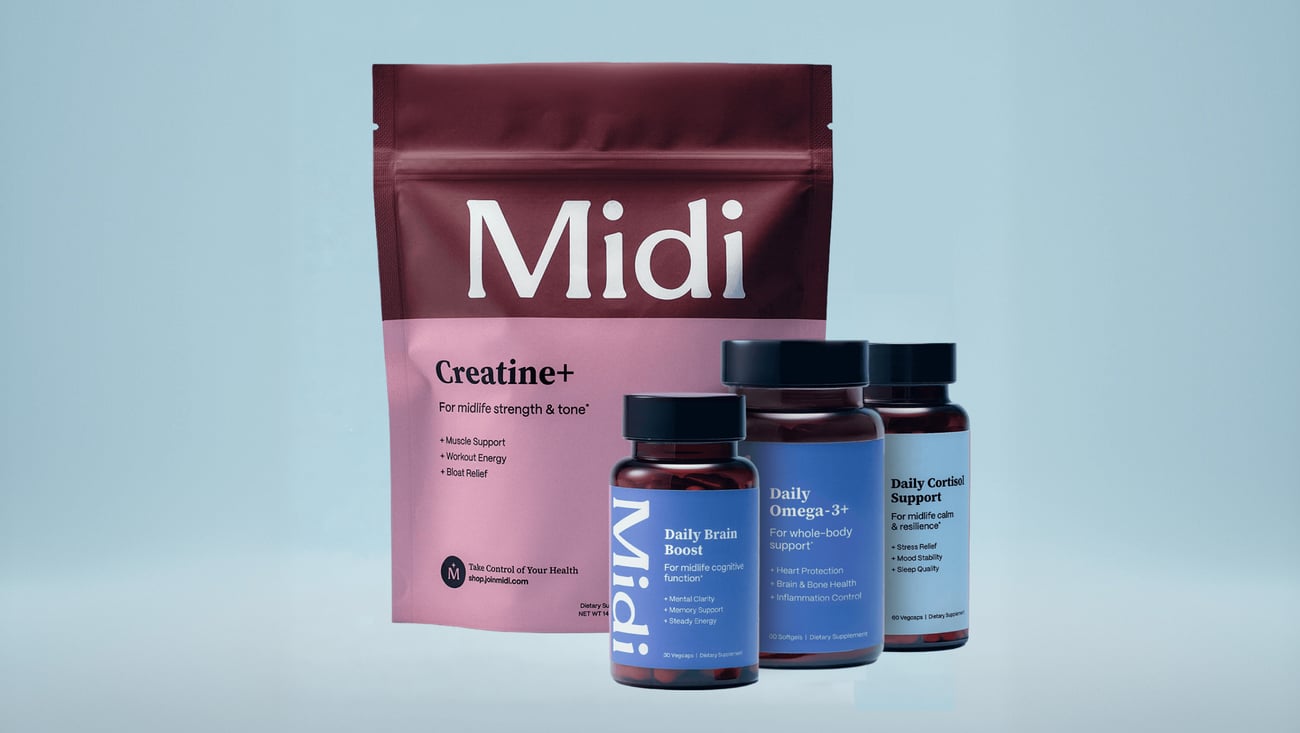
A Smarter Approach to Brain Fog |
 |
|
Brain fog often has more than one cause, which is why a single supplement isn't always enough. Clear things up with the new Brain Fog Bundle. It combines four clinician-created supplements that work together to take a more complete approach to brain health.
|
| Shop the Brain Fog Bundle |
|
|
|
|
|
|
|
|
|
|
"Does intermittent fasting actually work for losing weight in menopause?" |
|
|
|
|
|
|
|
Intermittent fasting — cycling between periods of eating and fasting — gets a lot of attention, and for good reason. It can help some women improve insulin sensitivity and lose abdominal fat. But during perimenopause and menopause, fasting too long or not eating enough can raise cortisol levels, which may work against your weight-loss goals.
If you want to try it, here's where to start:
-
Ease into it. Start with a shorter fasting window (say, 12 hours) instead of diving into an aggressive schedule.
-
Make protein a priority. Protein helps preserve muscle mass, which naturally declines during midlife.
-
Don't skip strength training. Building muscle supports metabolism and long-term health.
-
Listen to your body. If you're constantly exhausted, irritable, or craving carbohydrates, your plan may need adjusting.
If your weight-loss efforts keep hitting a wall and you’re wondering if intermittent fasting is worth a try, bring it up with a Midi Clinician. They can help you understand what's getting in the way and recommend solutions that are right for you. |
|
|
|
|
|
|
|
|
Missed last week’s newsletter? |
|
Catch up on past editions of the Midi Weekly and subscribe to get expert tips, science-backed solutions, and the latest menopause news straight to your inbox. |
|
|
|
|