Share
Your cortisol might be to blame—but this can help
 ‌ ‌ ‌ ‌ ‌ ‌ ‌ ‌ ‌ ‌ ‌ ‌ ‌ ‌ ‌ ‌ ‌ ‌ ‌ ‌ ‌ ‌ ‌ ‌ ‌ ‌ ‌ ‌ ‌ ‌ ‌ ‌ ‌ ‌ ‌ ‌ ‌ ‌ ‌ ‌ ‌ ‌ ‌ ‌ ‌ ‌ ‌ ‌ ‌ ‌ ‌ ‌ ‌ ‌ ‌ ‌ ‌ ‌ ‌ ‌ ‌ ‌ ‌ ‌ ‌ ‌ ‌ ‌ ‌ ‌ ‌ ‌ ‌ ‌ ‌ ‌ ‌ ‌ ‌ ‌ ‌ ‌ ‌ ‌ ‌ ‌ ‌ ‌ ‌ ‌ ‌ ‌ ‌ ‌ ‌ ‌ ‌ ‌ ‌ ‌ ‌ ‌ ‌ ‌ ‌ ‌ ‌ ‌ ‌ ‌ ‌ ‌ ‌ ‌ ‌ ‌ ‌ ‌ ‌ ‌ ‌ ‌ ‌ ‌ ‌ ‌

Book a Visit

Shop Supplements

Cravings get loud in midlife. Stress, hormone shifts, and poor sleep can all push cortisol (your body’s stress hormone) higher, which can ramp up appetite. But surprisingly, what you eat and drink can also raise cortisol levels—and make you want to stress snack even more. It’s a vicious cycle.


Some of the biggest cortisol triggers:

  • Eating sugary snacks and ultra-processed foods

  • Skipping meals or under-eating

  • Grazing all day on carbs without enough protein or fiber

  • Late-night eating

  • High alcohol or caffeine intake

  • Not drinking enough water

Small shifts can make a big difference. Eating more protein at breakfast and balancing meals with fiber and healthy fats can help steady energy, improve sleep, and calm cravings. Cortisol supplements may also support your body’s stress response so you’re not reaching to calm it with cookies. 


And if lifestyle changes aren’t enough, a Midi Clinician can help identify whether nutrient deficiencies, thyroid issues, or other health factors may be contributing.

Book a Visit

Best of the Blog

A Close Look at Exactly Why There’s an Estrogen Patch Shortage

Read More

Does Estrogen Increase Sex Drive? What Changes in Midlife

Read More

Metformin for Longevity: What the Evidence Really Says

Read More

Save the Date

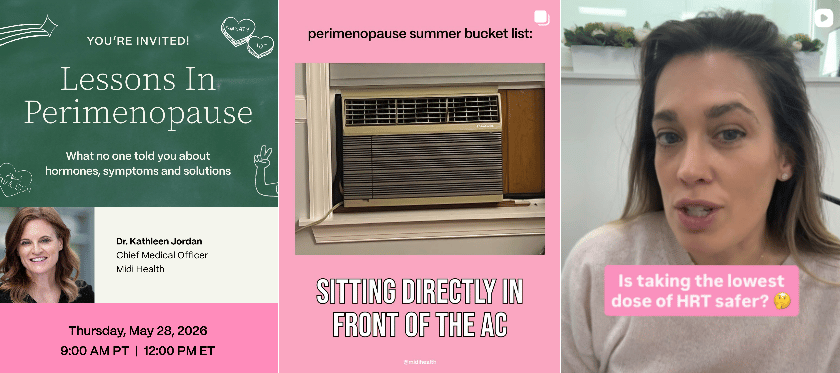
Lessons In Perimenopause:

Symptoms, Science & Solutions

May 28, 9:00 am PST

You didn’t miss the lesson about perimenopause in health class… because no one ever taught it!


This Thursday, join Midi's Chief Medical Officer for an honest, informative conversation about perimenopause. We’ll walk you through what’s happening in your body, why symptoms show up, and what actually helps.

Save My Spot

Trending Topics

Ask a Midi Clinician

Kathleen Jordan, Midi's Chief Medical Officer

Q:

“My OB/GYN, primary care doctor, and endocrinologist have all denied me GLP-1s. Why is it so hard to get help?”

A:

Unfortunately, this is a common experience. GLP-1 medications are still relatively new, and many healthcare providers weren’t trained on them during residency. Some also only feel comfortable prescribing them for a limited set of conditions—or simply don’t specialize in weight, metabolic, and midlife hormone care.


At Midi, we see firsthand how issues like weight gain, insulin resistance, cardiovascular risk, and hormone shifts disproportionately affect women in midlife. That’s why our Clinicians stay up to date on the latest research and best practices around GLP-1s and metabolic health.


The good news: you don’t have to keep feeling dismissed. A Midi Clinician can help you understand your options, determine whether you’re a candidate for GLP-1s, and create a plan tailored to your health history and goals.

Book a Visit

Follow Us

@midihealth

Missed last week’s newsletter?

Catch up on past editions of the Midi Weekly and subscribe to get expert tips, science-backed solutions, and the latest menopause news straight to your inbox.

Read More

Email Marketing by ActiveCampaign